Federal spending flows through hundreds of thousands of contracts with staggered expiration dates, inconsistent recompete language, and forecasts scattered across dozens of agency portals. GAO reports roughly $755 billion in total federal contract spending in FY2024, and a meaningful share of that comes from existing contracts cycling back through competition. Manual portal-checking and spreadsheets simply can't keep pace.
This guide covers what recompete tracking software actually does, the features that separate real tools from glorified bookmark folders, and how AI-driven platforms are changing how contractors find and win rebid work.
Key Takeaways
- Recompete tracking software flags expiring contracts and rebid signals months before an RFP posts
- AI-based semantic matching catches recompetes that keyword search misses entirely
- The strongest tools pair opportunity discovery with automated Go/No-Go scoring and pipeline visibility
- Intellectible's engines cut opportunity search and Go/No-Go decision time by 95%+ without added headcount
What Is Recompete Tracking Software?
Recompete tracking software monitors contract expiration dates, solicitation postings, and agency forecasts to flag upcoming rebid opportunities before they become public knowledge. It acts as an early-warning system for work that's about to hit the street again.
Basic SAM.gov saved searches let you follow keyword-based notices and get email alerts. That's useful, but limited. Dedicated tracking platforms go further by adding:
- Incumbent identification and vulnerability signals
- NAICS and PSC-based filtering across agencies
- Fit or priority scoring against your own capabilities
- Historical award pattern analysis
Contract expirations aren't isolated events. GAO describes the recompete lifecycle as a period where an existing contract approaches expiration while a follow-on isn't yet ready to award, sometimes prompting a bridge contract to avoid a service gap. Tracking software exists precisely to close the gap between "contract expiring" and "follow-on ready."
These tools serve two very different audiences with the same data. Incumbents use them to protect existing work and get ahead of their own recompete. Challengers use them to hunt for vulnerable contracts held by competitors. Both groups lose ground when tracking stays manual.

Why Manual Recompete Tracking Fails Contractors
Federal agencies don't use consistent language for the same thing. One posting calls it a "follow-on." Another calls it a "successor contract." A third calls it a "bridge extension" while quietly signaling that a full recompete is coming next. Keyword-based searches miss these variations constantly.
Beyond terminology, manual tracking has a volume problem:
- BD teams checking SAM.gov, agency forecast sites, and industry newsletters by hand produce false negatives
- Hours get burned reviewing low-fit opportunities that never should have made the list
- Real signals get buried in noise from dozens of daily notices
The biggest cost is timing. Discover a recompete after the RFP drops, and you've lost the window to build competitive intelligence, line up teaming partners, or influence requirements through industry days.
That default favors whoever already holds the contract. Incumbents have historically won a majority of recompetes, though that edge has narrowed. Federal News Network reported incumbent win rates falling from 75% in 2015 to 54% in 2016, based on a Grant Thornton-sponsored contractor survey. Late discovery only widens whatever advantage remains.

Must-Have Features in Recompete Tracking Software
Not every tool marketed as "recompete tracking" actually does the job. Here's what separates a real system from an alert feed.
Contract Monitoring and Semantic Matching
FAR 42.302 requires contract administration functions like status reporting and slippage tracking. Good software mirrors this by monitoring period-of-performance and option-exercise timelines, filterable 6 to 24 months out, across NAICS codes and agencies.
FAR 19.102 requires every solicitation to carry a NAICS code tied to the acquisition's principal purpose. That makes NAICS-based filtering a non-negotiable feature—not a nice-to-have filter buried in advanced settings.
Keyword-only search still fails on language. It misses "successor," "bridge," and "follow-on" variations agencies actually use. AI-driven semantic matching, often built on vector databases, catches those recompete signals regardless of the term in a given posting.
Incumbent and Past-Performance Intelligence
CPARS is the FAR-designated source for past-performance data used in future source selection (FAR Subpart 42.15). Tools should surface comparable intelligence:
- Price increases or scope changes on the incumbent's contract
- Historical award patterns and bidder density
- Vendor concentration and set-aside eligibility shifts
Compliance Extraction, Go/No-Go Scoring, and Pipeline Flow
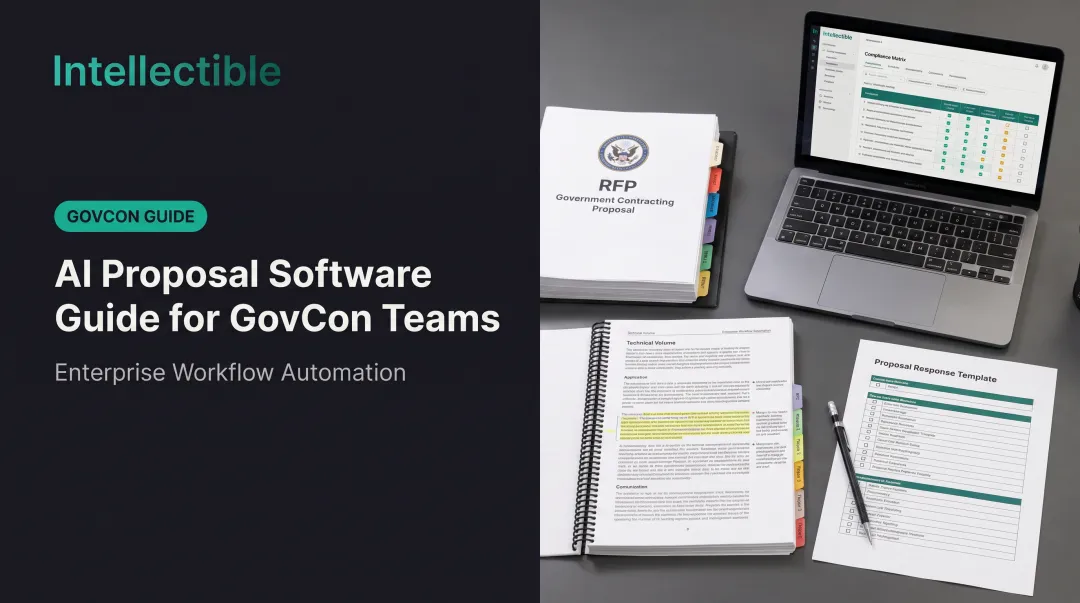
Parsing an RFP by hand takes hours. Automated extraction pulls requirements, flags compliance gaps, and builds a compliance matrix before your team invests serious time in a pursuit.
Scoring should rank opportunities so teams chase the right pursuits first—not everything that lands in an inbox. Strong models weigh:
- Fit against core capabilities
- Urgency of the recompete window
- Risk and competitive density
- Capability match to stated requirements
Discovery data should flow straight into proposal and pricing workflows, not get re-entered into a second system. Without that handoff, teams re-key the same record three times before a bid ever ships.
How AI-Powered Platforms Automate the Entire Recompete Workflow
Alerts tell you something changed. They don't tell you what to do about it. AI-powered platforms close that gap by automating the full path from opportunity discovery to decision.
A visual workflow builder connects the pieces that used to live in separate tools:
- Opportunity intake — converts federal notices into structured capture records with agency, NAICS/PSC codes, timing, scope, and risk signals
- Qualification — semantic fit analysis and configurable capture rules filter against target agencies, deal size, and vehicle access
- Recompete and competitor analysis — comparisons against award history, contract timing, and scope similarity surface likely incumbents and expiring contracts
- Solicitation parsing — extracts requirements and builds compliance matrices automatically
- Decision and routing — routes Go/No-Go reports to capture, pricing, legal, or executive review, with status feeding back into existing CRM systems

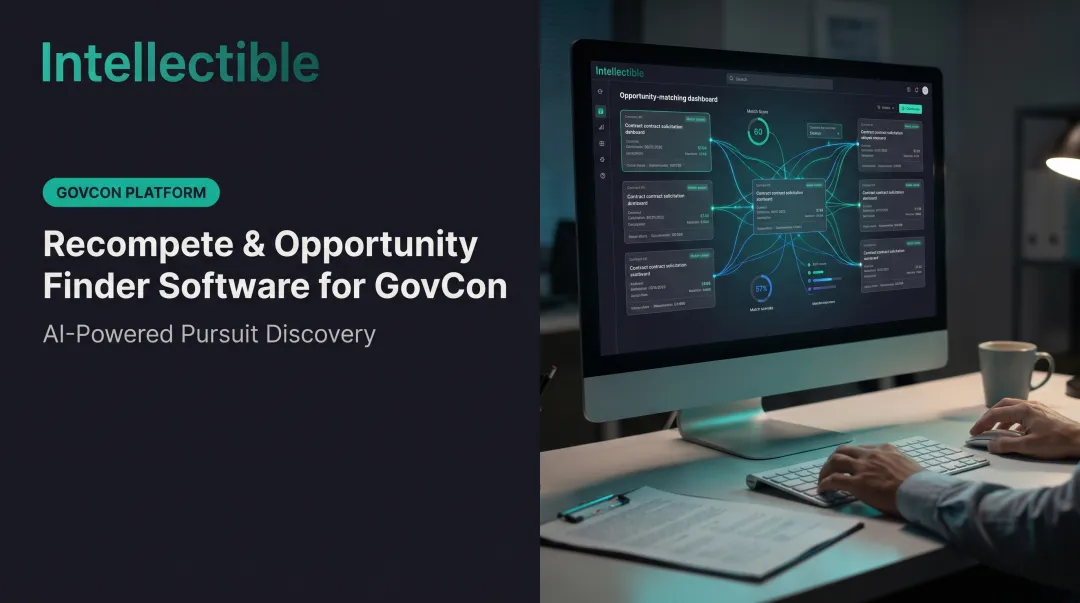
Intellectible's GovCon Engine and Revenue Discovery Engine automate this entire chain. Teams see 95%+ time savings on opportunity search and Go/No-Go decisions, plus a 150%+ increase in actionable top-of-funnel opportunities.
Real customers see the difference. Oceus, a government contractor, now identifies and reviews more than double the qualified opportunities it saw before.
CEO Jeff Harman noted the company clears seven to eight opportunities a month past its qualification threshold, plus new business-development exposure that did not exist before, including a pipeline lead from an AI-drafted email.
HHS uses the platform for bid and proposal operations. John Grady, HHS's Corporate Director of Business Development, put it this way: "Intellectible is taking the tedious, monotonous hours of RFP efforts out of human hands. This allows us to do what we should be doing: analyzing and selling."
Pricing follows the same automation path. Once an opportunity is qualified, the Pricing Engine handles intake, extraction, assumption review, cost modeling, and pricing publication. That cuts time to final pricing by up to 90% and keeps a full audit trail:

- Source traceability
- Version history
- Approval status
- Every step from raw data to delivered price
None of this requires more headcount. It requires a system that connects what used to be five disconnected steps.
Best Practices for Using Recompete Tracking Software Effectively
Software alone won't win recompetes. How you use it matters just as much.
- Set alerts 12-18 months ahead of contract expiration. This aligns with when agencies typically start acquisition planning and market research, giving you time to build relationships before an RFP drops.
- Combine software signals with direct agency engagement. Attend industry days, respond to RFIs, and engage sources sought notices. Tools flag opportunities; humans still build the relationship.
- Revisit your Go/No-Go criteria regularly. Certifications expire, capabilities grow, and past performance changes. Scoring inputs that were accurate last year may misjudge fit today.
Frequently Asked Questions
Can a government contract be terminated?
Yes. Agencies can terminate for cause (default or nonperformance) or for convenience, even without contractor fault. A recompete is different: it is a scheduled re-solicitation, not a termination.
How should a services firm plan around bridges versus recompetes?
A bridge is a short-term sole-source extension when the follow-on is not ready; a recompete is a full competitive re-solicitation, and GAO found most follow-ons in its review were competed. For services firms whose revenue base sits in recurring work, a bridge is a scheduling signal to prepare, not a reprieve from competing.
How early should contractors start tracking a recompete opportunity?
Most experienced BD teams start 12 to 18 months out, matching the window when agencies begin acquisition planning and market research. Earlier tracking means more time for capture planning and relationship-building before an RFP posts.
Do incumbents always win recompetes?
No. Incumbents hold a real advantage, but it's shrinking and far from guaranteed. Performance issues, scope changes, or price problems can open the door for challengers with strong past performance elsewhere.
What features distinguish AI-powered recompete tools from basic alert systems?
Basic systems send keyword-triggered emails. AI-powered platforms add semantic matching, automated Go/No-Go scoring, incumbent intelligence, and workflow automation that routes decisions across teams, not just notifications.