This guide explains how the RFP/RFQ process works from the contractor's seat — what each document type means, how the process runs from opportunity to award, and what separates contractors who win consistently from those who exhaust their proposal budgets chasing low-probability bids.
Key Takeaways
- RFQs are for well-defined, lower-dollar purchases; RFPs are for complex acquisitions where technical approach and past performance carry real weight
- Sections L and M in an RFP are the two most important sections — ignore them at your peril
- A disciplined Go/No-Go decision is the highest-leverage step in your entire pursuit process
- LPTA and best value tradeoff require fundamentally different response strategies
- Pipeline discipline wins more work than any single proposal
What Is the RFP/RFQ Process in Government Contracting?
The federal solicitation system runs on two primary documents, and confusing them costs contractors real money.
RFQ vs. RFP — The Core Difference
An RFQ (Request for Quotation) is a solicitation for pricing on well-defined goods or services. Under FAR 13.004, a quotation is not a legal offer — the government's purchase order is the offer, and a contract forms when the supplier accepts in writing or furnishes the supplies.
RFQs are used for simplified acquisitions, typically at or below the $350,000 Simplified Acquisition Threshold (effective October 1, 2025). FAR Part 13.5 allows simplified procedures for certain commercial acquisitions up to $9 million.
An RFP (Request for Proposal) is used in negotiated acquisitions for complex, higher-value work. Per FAR 15.203, RFPs must describe the government's requirements, anticipated terms and conditions, and evaluation factors with their relative importance. Proposals are legal offers that result in a binding contract upon award.
Where Does an RFI Fit?
An RFI (Request for Information) is a market research tool — not a solicitation. Under FAR 15.201(e), the government issues RFIs when it wants market information but doesn't intend to award a contract. Responding to one doesn't produce an award, but it can influence how the eventual RFP is written. That's a reason to respond thoughtfully, not a reason to skip them.
Why This Structure Matters
The Federal Acquisition Regulation governs every step of this process to ensure transparency and competition in how taxpayer funds are awarded. Misreading which process applies — or missing compliance mechanics — means responses get disqualified before evaluation even begins.
Knowing the difference upfront shapes everything downstream:
- RFQ: Price-focused, simplified acquisition, no complex technical volume required
- RFP: Proposal-based, negotiated acquisition, evaluated on technical approach and price
- RFI: Market research only — no award, but real influence on how requirements get written
How the RFP/RFQ Process Works: Step-by-Step
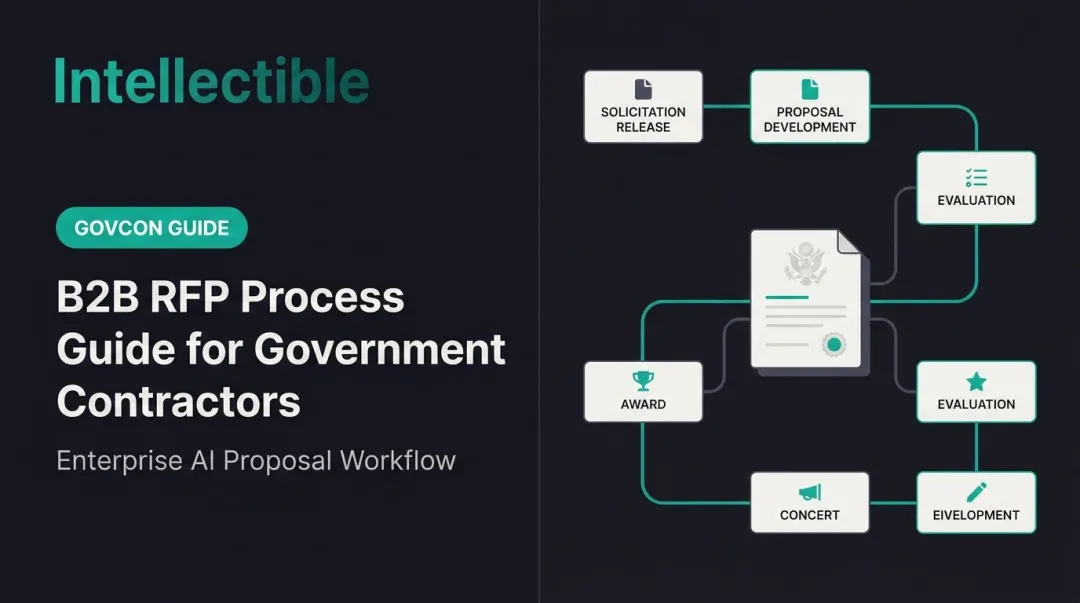
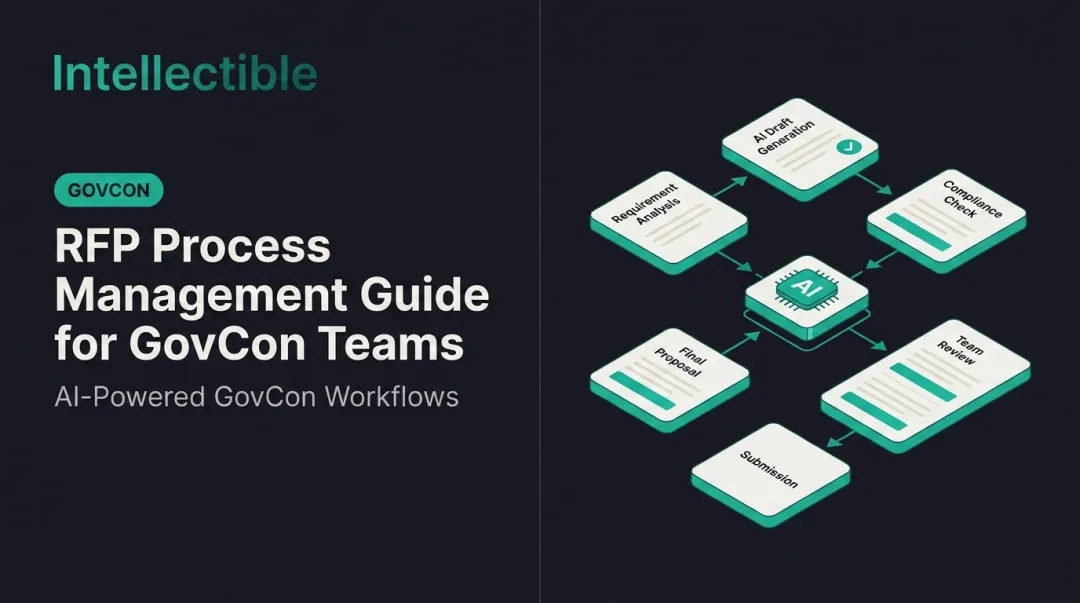
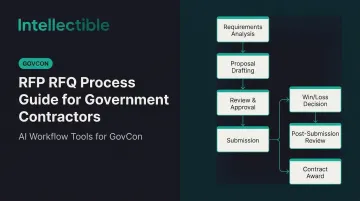
From a contractor's perspective, the cycle runs: opportunity identification → pursuit decision → solicitation analysis → response development → submission → evaluation/award. An RFP process can span weeks to several months. Here's how each stage works.
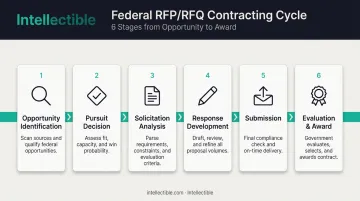
Step 1: Identify and Monitor Solicitations
SAM.gov is the primary database for federal solicitation notices. Under FAR 5.201, contract actions over $25,000 must be synopsized through SAM.gov (with exceptions under FAR 5.202). The platform posts presolicitation notices, RFIs, RFQs, and RFPs.
Two filtering mechanisms that matter most:
- NAICS codes — FAR 19.102 requires one NAICS code per solicitation. Filter your SAM.gov searches by your relevant NAICS codes to find eligible opportunities
- Set-aside categories — Small business set-asides (8(a), WOSB/EDWOSB, HUBZone, SDVOSB) restrict competition to certified firms; knowing your eligibility determines which notices are actually pursuable
Step 2: Conduct a Go/No-Go Analysis
This is a deliberate decision gate, not a formality. Before committing proposal resources, evaluate:
- Incumbent status and who currently holds the contract
- Prior agency relationships and program office engagement
- Whether your solution genuinely fits the requirement
- Required certifications and whether you hold them
- Competitive density (how many firms will likely bid)
- Realistic probability of win (Pwin)
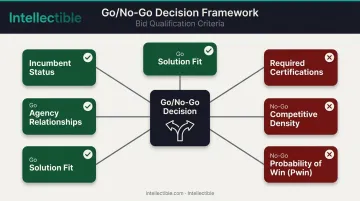
Contractors who win consistently pursue far fewer bids than they're eligible for. Bidding everything that clears a basic eligibility filter is how proposal budgets disappear without producing awards.
Step 3: Parse the Solicitation Document
For RFPs, three sections drive your response strategy:
- Section L (Instructions to Offerors) — tells you exactly what to submit, in what format, with what page limits. Per FAR 15.204-5, this section governs submission instructions
- Section M (Evaluation Criteria) — tells you how you'll be scored and what factors carry the most weight
- Section C (Statement of Work or PWS) — defines what the agency is buying
For RFQs, the scope is typically already fixed. The agency wants price, delivery terms, and vendor qualifications — a quote, not a technical narrative.
Step 4: Build and Submit Your Response
A compliant RFP response typically includes:
- Technical volume — approach, methodology, staffing plan
- Management volume — team structure, quality control, risk management
- Past performance volume — relevant contracts with documented results
- Price/cost volume — submitted separately to avoid contaminating technical evaluation
Treat formatting instructions as binding. In Horizons Youth Services (B-423202, 2025), GAO upheld a proposal's elimination because the offeror used Arial Narrow instead of the required Arial font. Page limits, margins, and font specifications are compliance tests — agencies use them to screen for contractors who can follow directions before awarding a contract that requires exactly that.
For RFQs, the response is usually a quote with pricing, delivery terms, and minimal narrative.
Step 5: Post-Submission Evaluation and Award
The agency evaluates proposals against the criteria in Section M under either LPTA or best value tradeoff. Depending on the evaluation, agencies may:
- Issue a Request for Clarification (RFC) for minor issues
- Invite offerors to submit Final Proposal Revisions (FPR) before award
- Make an award decision and notify all offerors
Under FAR 15.506, unsuccessful offerors must request a debriefing within 3 business days of receiving the award notice. The agency must debrief within 5 days of receiving that request.
A debriefing surfaces your evaluated ratings, significant weaknesses, and the basis for the award decision. Document those findings immediately — they're the clearest signal available for adjusting your approach on the next pursuit.
Key Factors That Affect Your Response Strategy
Knowing the process is table stakes. What separates competitive contractors is understanding how to calibrate a response based on how the agency will make its decision.
Source Selection Method: LPTA vs. Best Value
This choice changes everything about how you should write:
| Method | How It Works | Response Implication |
|---|---|---|
| LPTA | Lowest price among technically acceptable offers wins; exceeding minimums earns no credit | Compliance and competitive pricing are the entire game |
| Best Value Tradeoff | Agency can award to a higher-priced offeror if technical merit justifies it | Differentiation in approach, staffing, and past performance matters |
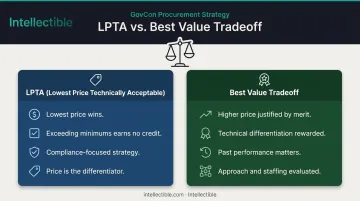
GAO reported that in FY2018, DoD used LPTA for about 25% of competitively awarded contracts valued at $5 million or more. Applying a best value strategy to an LPTA procurement — or vice versa — is a structural mistake that proposal writing quality can't fix.
Competitive Intelligence and Incumbent Research
Research the incumbent before you build your response. An agency re-competing an existing contract often has implicit expectations baked into the PWS that favor the incumbent's delivery model.
Research the incumbent before you build your response. An agency re-competing an existing contract often has implicit expectations baked into the PWS that favor the incumbent's delivery model.
Start with these sources:
- Check award history and contract values on USASpending.gov
- Review contract duration and any modifications or extensions
- Study the agency's past evaluation patterns and source selection decisions
GAO has held that an incumbent's competitive advantage isn't unfair preference unless it resulted from government-provided treatment. Incumbent knowledge is legitimate — so build your own.
Pricing Strategy
For cost-reimbursable contracts, agencies assess whether proposed costs are realistic. For fixed-price contracts, price-to-win (PTW) analysis using publicly available award data from USASpending.gov helps calibrate your bid against likely competitor pricing.
Teams using AI-assisted workflows can reduce time to final pricing by up to 90% while maintaining the full audit trail that FAR compliance requires.
Past Performance and CPARS
Past performance follows you through CPARS. Per FAR 42.15 and FAR 15.305, source selection officials rely on CPARS ratings when evaluating proposals.
If your record is thin, teaming with a prime or subcontractor who has strong, relevant ratings can be the deciding factor in whether your proposal clears the competitive threshold.
Common Mistakes Government Contractors Make
Losing proposals often share the same patterns — and none of them are about technical capability.
Treating RFQs Like RFPs (and Vice Versa)
Contractors over-engineer RFQ responses — wasting resources on narrative nobody will read — or underestimate RFP complexity and submit thin, generic proposals. The solicitation type signals how much scrutiny your response will receive. Match your effort to that signal.
Ignoring Sections L and M
Many proposal teams read the Statement of Work carefully (what the government wants) while skimming Sections L and M (how to submit and how you'll be scored). This produces responses that are technically capable but structurally wrong. Failing to address evaluation criteria explicitly is one of the most common reasons capable contractors score poorly.
Bidding Without a Go/No-Go Filter
Without a disciplined pursuit decision process, teams burn proposal budget on low-probability bids — then lack resources when high-Pwin opportunities arrive. Every proposal costs time and money. A Go/No-Go filter keeps you focused on bids worth winning.
When to Pursue — and When to Walk Away
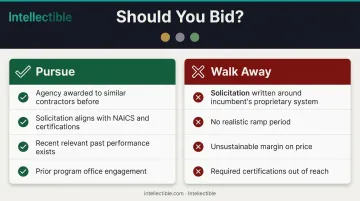
Signals Worth Pursuing
- The agency has awarded to contractors with your capability profile in the past
- The solicitation aligns with your NAICS codes and any socioeconomic certifications
- You have recent, relevant, and documentable past performance
- You've had prior engagement with the program office — through RFI responses, industry days, or capability briefings (FAR 15.201 explicitly permits these exchanges)
Signals to Walk Away
- The solicitation is written around an incumbent's specific technical solution or proprietary system
- Performance begins immediately with no realistic ramp period
- Price is weighted so heavily that sustainable margin is impossible
- Required certifications — clearances, specific set-aside categories — are out of reach for this competition
How Automation Changes the Math
Applying these signals manually works — until pipeline volume makes it unsustainable. Triaging SAM.gov notices, researching incumbents, and scoring competitive fit takes real time, and that workload creates a hard ceiling on how many opportunities any team can evaluate without missing quality bids.
Intellectible's Proposal & Pursuit Engine handles that triage automatically. The platform analyzes over 3,200 federal opportunities per day, generating structured capture records — including NAICS/PSC codes, fit rationale, incumbent signals, and risk flags — for each notice, then runs a structured go/no-go covering fit, urgency, risk, contract terms, and capability match before any proposal resources are committed.
Defense contractor Oceus used the platform to double the qualified opportunities it surfaces and reviews each month. Jeff Harman, CEO of Oceus, said: "Now we're looking at more than double the qualified opportunities per week — about seven to eight opportunities a month making it through our threshold."
More volume reviewed means more quality bids pursued — without adding headcount to do it.
Conclusion
The RFP/RFQ process demands different things depending on solicitation type, source selection method, and agency context:
- RFQ: Requires price and compliance — nothing more
- LPTA RFP: Rewards minimum acceptable quality at the lowest cost
- Best value RFP: Rewards differentiated technical solutions and documented past performance
Conflating them produces generic responses that win nothing.
Winning in federal contracting comes down to disciplined pipeline management, compliant and differentiated responses, and a clear-eyed Pwin threshold. Every hour spent on a bid you can't realistically win is an hour pulled from one you can. Know the difference before you write a word.
Frequently Asked Questions
What is the RFQ process step by step?
Identify the solicitation on SAM.gov, review the scope and pricing requirements, then submit your price quote with any required vendor qualifications. The agency awards a purchase order to the selected vendor — faster and with far less documentation than an RFP.
What comes first, RFQ or RFP?
It depends on what the agency is buying. Most start with an RFI to gather market information, then follow with an RFQ or RFP. For complex buys, some agencies use an RFQ to gauge pricing before launching a formal RFP competition.
Who typically issues an RFQ?
Federal civilian agencies, DoD components, and state/local governments post RFQs on SAM.gov. For GSA Schedule (MAS) orders, contracting officers send RFQs directly to schedule holders through GSA eBuy under FAR 8.405 ordering procedures.
What is the difference between an RFP and an RFQ in federal contracting?
An RFQ is used when scope is fully defined and price is the primary evaluation factor — typically for lower-dollar or commercial item purchases. An RFP is used for complex acquisitions where the agency evaluates technical approach, past performance, management plan, and price, often under a best value tradeoff framework.
How do government contractors find RFPs and RFQs to bid on?
SAM.gov is the primary source for federal solicitations. Supplement it with agency forecast tools, GSA eBuy for schedule-based work, and industry days. Filter by NAICS code and set-aside category to focus on opportunities your organization is eligible and positioned to win.
What happens after you submit an RFP response to a government agency?
The agency's source selection team evaluates all proposals against the criteria in Section M. They may issue requests for clarification or invite offerors to submit final proposal revisions before making an award decision. Unsuccessful offerors are entitled to a debriefing — request it within 3 business days of receiving the award notice.