What is the rule of 2 in government contracting?
The Rule of Two is a small business set-aside principle used in federal contracting. If market research shows at least two responsible small businesses can perform the work at fair market prices, the government generally should set the acquisition aside for small business competition. For contractors, understanding this rule helps shape bid strategy, teaming decisions, socioeconomic positioning, and bid/no-bid analysis before committing proposal resources.
How to propose a government contract?
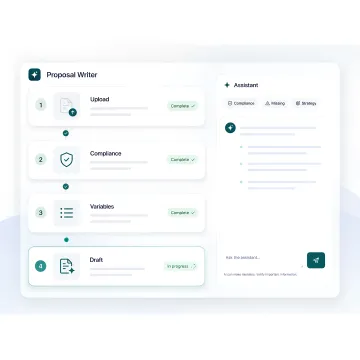
To propose a government contract, start by reviewing the solicitation, deadlines, evaluation criteria, instructions, required forms, and compliance requirements. Build a compliance matrix, confirm eligibility, assign owners, develop win themes, gather past performance, prepare technical and pricing volumes, and conduct formal reviews. Intellectible’s software structures this entire process so requirements, risks, evidence, approvals, and final response content stay organized from intake through submission without relying on manual consulting.
Can software replace traditional proposal development consulting?
Much of what proposal consultants do manually - RFP analysis, go/no-go guidance, compliance matrices, outline development, win theme planning, content coordination, review management, and final response readiness can be handled or accelerated by software. The Proposal & Pursuit Engine runs a governed workflow that reads solicitations to extract key dates, submission rules, evaluation criteria, and compliance obligations, then generates section drafts grounded in the RFP and reviews the assembled proposal against requirements, strategy, tone, and missing evidence. Intellectible keeps expert judgment in your hands while removing the manual scaffolding that slows your team.
When should a contractor start proposal development?
A proposal pursuit should begin as soon as a credible opportunity is identified, not when the final RFP is released. Early work can include incumbent research, agency pattern analysis, fit assessment, teaming review, pricing assumptions, past performance mapping, and capture strategy. Starting early gives proposal teams more time to develop differentiated messaging and reduces the risk of last-minute compliance gaps.
Why is a compliance matrix important for government proposals?
A compliance matrix converts solicitation requirements into a practical checklist of instructions, evaluation factors, page limits, attachments, forms, and response locations. It helps proposal teams confirm that every mandatory item is addressed and assigned. Intellectible’s software keeps compliance analysis connected to drafting, review, and approval workflows, reducing missed requirements and making final quality control easier before submission.
How does AI help with government proposal development?
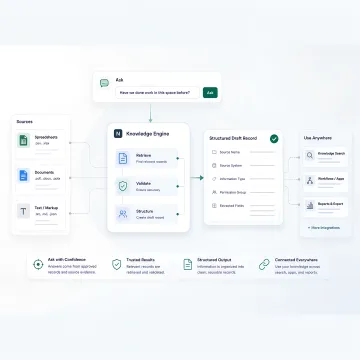
AI can support proposal development by summarizing RFPs, extracting requirements, generating draft outlines, building compliance matrices, organizing source content, identifying risk flags, and helping reviewers focus on gaps. It should not replace expert judgment, pricing discipline, or final compliance checks. Intellectible combines AI-powered systems with controlled workflows so teams gain speed while maintaining traceability and human review.
Does Intellectible’s software handle pricing?
Yes. Pricing runs from opportunity qualification through final response inside the software. Effective pricing requires scope interpretation, labor assumptions, location and service variables, risk review, margin posture, and approval routing. Intellectible’s pricing system replaces scattered spreadsheets with structured scenarios, source-backed assumptions, protected internal margin logic, and cleaner pricing views for proposal or customer review with a full audit trail.
Who is Intellectible’s proposal software best for?
Intellectible’s software is built for government contractors, federal and state opportunity pursuers, revenue operations teams, proposal and pursuit teams, pricing teams, CRM and operations teams, and knowledge management teams. It is especially useful for organizations managing high-volume opportunity research, complex pursuit decisions, multiple proposal contributors, or pricing workflows that need more structure without adding additional headcount.