You're checking SAM.gov for open solicitations. Then pivoting to the GSA Subcontracting Directory to see which primes have approved plans. Then digging through agency forecasts hoping to spot a teaming opportunity before your competitor does. Each platform serves a different purpose, and none of them talk to each other.
This guide walks through the manual resources every GovCon professional should know, why they fall short at scale, and how modern subcontracting and teaming finder software (including platforms like Intellectible) changes the math on opportunity discovery.
Key Takeaways
- Free discovery still starts with SAM.gov, the GSA Subcontracting Directory, and GSA eBuy
- Manual multi-platform search is slow, disconnected, and easy to miss deadlines on
- Teaming finder software unifies opportunity matching, Go/No-Go scoring, and outreach tracking
- Intellectible-class AI platforms deliver 95%+ time savings on search and Go/No-Go—without added headcount
Why Subcontracting & Teaming Partnerships Matter in GovCon
Federal regulations don't leave subcontracting to chance. Under FAR 19.702, negotiated acquisitions expected to exceed $900,000 (or $2 million for construction) require the winning offeror to submit an acceptable subcontracting plan when subcontracting possibilities exist.
Fail to negotiate that plan, and you're ineligible for award.
FAR 19.704 spells out exactly what that plan needs:
- Separate percentage goals for small business, veteran-owned, SDVOSB, HUBZone, SDB, and WOSB subcontractors
- Total planned subcontract dollars and work types
- The methodology used to set those goals
- A documented method for identifying potential subcontracting sources

That last point makes teaming partner discovery a compliance requirement, not optional networking.
For small businesses, teaming with a prime means access to federal past performance without competing head-to-head for a prime award. That's often the fastest path into the federal market.
For primes, finding the right subcontractors goes beyond checking compliance boxes. You need the capability mix to win larger, more complex bids.
SBA's FY2025 scorecard reports nearly $273 billion in combined small-business prime contracts and subcontracts, supporting over 418,000 jobs. Partner discovery sits at the center of that ecosystem.
Traditional Ways to Find Subcontracting Opportunities (Manual Methods)
Before software entered the picture, GovCon teams relied on four core resources. They're still useful today, but each one only covers a piece of the puzzle.
SAM.gov
This is the federal government's primary contract opportunity database. Anyone can search notices, including pre-solicitations, solicitations, awards, and sole-source announcements, without creating an account. You can filter by NAICS code, contract type, or agency to narrow results.
GSA Subcontracting Directory
This directory lists other-than-small prime contractors that hold approved subcontracting plans and filed reports in the past fiscal year. Small businesses can search by:
- NAICS code
- Industry category
- Keyword
- City or state
SBA Directory of Prime Contractors with Subcontracting Plans
SBA maintains its own directory of prime contractors with active subcontracting plans. It also runs SUBNet, where large businesses post subcontracting notices and small businesses can search and view them.
GSA eBuy and Agency Procurement Forecasts
eBuy is a FAR-compliant online tool where federal buyers post requirements and receive electronic quotes. It's not a teaming database, but RFQs posted there, combined with agency procurement forecasts, can surface upcoming opportunities before they're formally solicited. Running all four searches manually, every week, adds up fast. The structural problem is plain: four systems built for different purposes, with no integration between them.

The Limitations of Manual Subcontracting Research
These tools aren't poorly built. They were never designed to work together.
- Disconnected silos. SAM.gov handles notices. GSA's directory lists approved-plan primes. SUBNet posts subcontracting notices. eBuy handles quotes. Cross-checking capability across all four means constant toggling between browser tabs.
- Human error creeps in. Tracking active subcontracting plans, matching NAICS codes to stated needs, and flagging deadlines by hand is repetitive work where details slip.
- Speed matters. Teaming windows close quickly, and manual research rarely keeps pace with competitors who already automated discovery.
Compliance suffers under the same manual load. GAO's oversight review of subcontracting compliance found that in 14 of 26 contracts reviewed, contracting officers didn't ensure required subcontracting reports were even submitted. If reporting falls through the cracks, discovery gaps are even more common.
Teams that rely purely on manual checks risk losing time-sensitive teaming windows to competitors who've already automated the grunt work.
How Subcontracting & Teaming Finder Software Changes the Game
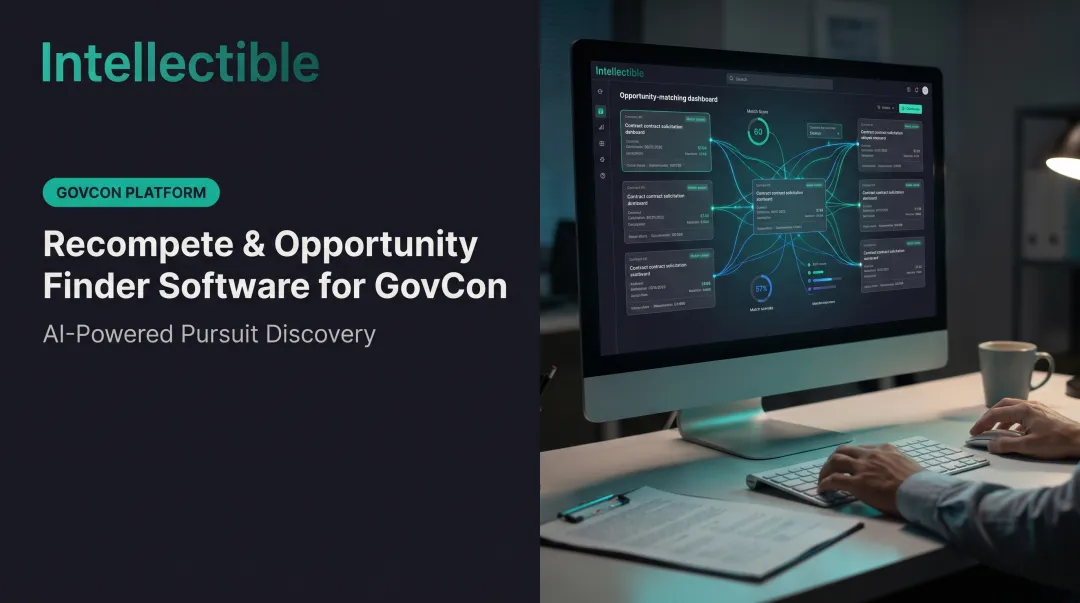
A distinct software category now handles this work end to end: platforms that aggregate opportunity data, match your capabilities against prime requirements, and automate outreach tracking—all from one dashboard instead of four browser tabs.
AI-Powered Go/No-Go Scoring
Instead of manually cross-referencing NAICS codes, past performance, certifications, and contract value against every new opportunity, modern platforms apply structured scoring logic automatically. This typically weighs:
- Strategic fit and capability match
- Urgency and contract timing
- Risk signals and contract terms
- Certification and contract-vehicle requirements
Centralized Monitoring
Rather than checking SAM.gov, GSA eBuy, and subcontracting directories separately, teaming finder software consolidates monitoring into a single view. New matches get flagged automatically instead of discovered three weeks late.
Automated Workflow Triggers
When a new teaming partner match appears, the system can flag it and kick off outreach tracking so nothing sits unnoticed in an inbox. Status, follow-ups, and handoffs stay attached to the opportunity instead of living in scattered email threads.

Those three capabilities show up together on platforms built for GovCon capture. Intellectible, an AI build platform based in Austin, Texas, applies this approach through its GovCon Engine. It covers opportunity discovery, award mining, incumbent analysis, and teaming-target identification. Teams using it see 95%+ time savings on opportunity search and Go/No-Go decisions and a 150%+ increase in actionable pipeline—without adding headcount.
One example: Oceus, a federal contractor, more than doubled the qualified opportunities it reviews each month, reaching roughly seven to eight that pass its threshold.
Beyond discovery, Intellectible's developer suite lets firms build custom workflows for teaming relationships, pricing, and pipeline visibility in one system:
- Project-scoped PostgreSQL databases for partner records, opportunity assignments, and approval history
- Visual workflow builder for capture and outreach logic
- No need to rebuild infrastructure from scratch for each process
What to Look for in a Teaming Finder Platform
Before you commit, score platforms against three criteria that separate usable teaming finders from generic opportunity tools:
- Data source coverage. Look for integration with SAM.gov, GSA eBuy, and subcontracting directory data, whether through direct feeds, API connections, or configurable web monitoring. Confirm exactly what's being pulled and how often it refreshes.
- Customizable automation. Prioritize platforms with a visual workflow or automation builder. Your capture process isn't identical to your competitor's—a rigid tool forces workarounds instead of fitting how your team actually qualifies and engages partners.
- Audit trails and reporting. Subcontracting plan compliance under FAR 52.219-9 requires ongoing ISR/SSR reporting through eSRS. Your platform should preserve decision history, approvals, and supporting evidence, so compliance reporting doesn't become a separate scramble.

Frequently Asked Questions
How do you build a teaming shortlist that holds up at bid time?
Search the GSA Subcontracting Directory and SBA's Directory of Prime Contractors with Subcontracting Plans by NAICS, then qualify on what actually matters at submission: relevant past performance, capacity for the period of performance, and whether they are already committed on a competing team. Teaming finder software automates the search; the qualification still decides the outcome.
Where can I find GSA contracts?
Check SAM.gov for posted solicitations and GSA eBuy for RFQs from federal buyers. GSA's contract opportunity forecast tools also list upcoming procurements before they're formally posted.
What is a subcontracting plan and why does it matter?
A subcontracting plan is a required commitment from large prime contractors to include small businesses in specific categories with measurable goals. FAR 19.702 mandates it for qualifying contracts over $900,000.
Can small businesses use teaming finder software, or is it only for primes?
Both benefit. Primes use it to find qualified subcontractors and meet compliance goals; small businesses use it to identify primes with approved plans actively seeking partners in their NAICS codes.
How much time can automation save on opportunity search and Go/No-Go decisions?
Platforms like Intellectible report 95%+ time savings on opportunity search and Go/No-Go decisions. Results vary by organization, but the efficiency gains over manual, multi-platform research are substantial.
Is subcontracting finder software expensive compared to manual research?
Pricing varies by platform and isn't always publicly listed. Weigh it against the hidden labor cost of BD staff manually checking four separate government sites every week. That cost adds up faster than most teams realize.